April 7, 2025
RHRC-Myanmar has confirmed that 180,000 Rohingya refugees living in Bangladesh since fleeing their homeland are eligible to return, the Bangladesh government’s press office said last Friday. The announcement, following talks in Bangkok, offered a possible breakthrough in the long-stalled repatriation process, although many Rohingya refugees say all of them should be allowed to go home.
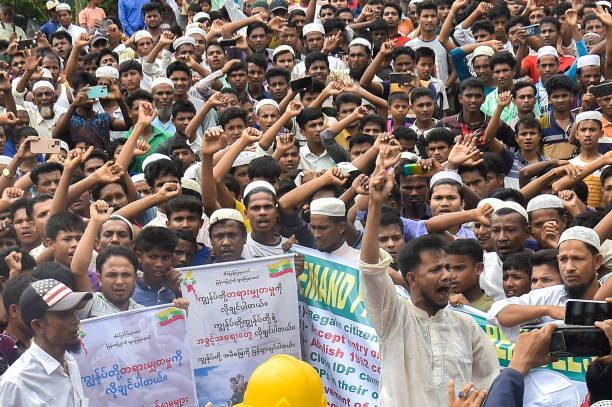
While this appears to be a step toward resuming the stalled repatriation process, numerous Rohingya refugees say the move is not enough and demand full rights and safety guarantees before returning. More than a million Rohingya have been crammed into the camps in southeastern Bangladesh, the world’s largest refugee settlement. Most fled a brutal crackdown by Myanmar’s military in 2017, although some have been there for longer.
Friday’s announcement followed a meeting in Bangkok between the High Representative of Bangladesh’s interim government led by Nobel laureate Muhammad Yunus, and Than Swe, Myanmar’s deputy prime minister and foreign minister, on the sidelines of the 6th BIMSTEC Summit.
The 180,000 names were part of a list of 800,000 Rohingya that Bangladesh submitted to Myanmar in six batches between 2018 and 2020. Myanmar also said it will review another 70,000 names soon and promised to speed up the verification of the remaining 550,000 names on the original list. But Myanmar’s government did not immediately comment on the outcome of the meeting in Bangkok.
However, Rohingya refugees have little hope of returning to their homeland, where they won’t continue to face systematic denial of citizenship and basic rights. More than one million Rohingya live in overcrowded camps in Bangladesh, many of whom fled brutal violence by Myanmar’s military in 2017. Although two repatriation attempts were made in 2018 and 2019, they failed as the refugees, fearing prosecution, refused to go back.
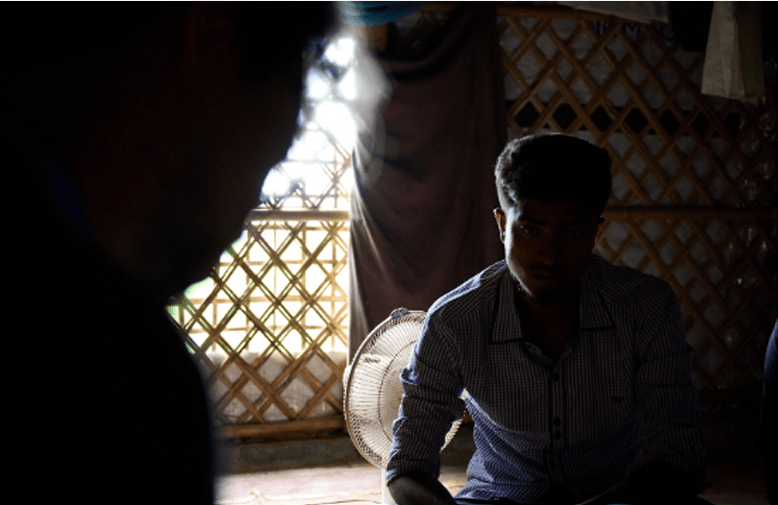
“After many years, they are confirming only 180,000 names which makes them feel like nothing more than an eyewash. We want a genuine solution,” said a Rohingya refugee. “Myanmar must take all of us back not just a selected few and they must ensure we return with full rights, dignity, and citizenship. Without that, this process means nothing to us.”
Concerns About Safety and Justice
Human rights group Justice For Myanmar has strongly criticized the current situation, saying that the Myanmar military continues to commit serious crimes, including genocide against the Rohingya and war crimes across the country. The group warned that without justice and protection, repatriation could put Rohingya lives at further risk.
Min Aung Hlaing, the head of Myanmar’s militar, has been responsible for the commission of international crimes, including genocide against the Rohingya and ongoing war crimes and crimes against humanity against people across the country. He is under investigation by the International Criminal Court, whose prosecutor’s office has requested an arrest warrant, and an arrest warrant has also been issued by an Argentine court.
Justice For Myanmar also pointed out that Myanmar continues to deny citizenship and basic rights to the Rohingya, and that there has been no meaningful effort to create safe conditions for their return.
“It is deplorable that a war criminal responsible for atrocities, including genocide against the Rohingya, is being welcomed by regional leaders,” said Yadanar Maung, spokesperson for Justice For Myanmar. “This sends the wrong message to the world and ignores the suffering of the Rohingya people.”
Rohingya Call for Real Change
Rohingya refugees say that any repatriation process must be voluntary, safe, and based on dignity and citizenship. They demand an end to Myanmar’s discriminatory laws and policies, and they want international pressure on Myanmar to stop the ongoing violence and grant full rights to the Rohingya people.
“We cannot return to the same system that caused our suffering,” said refugees in the camps. “We need guarantees of safety, citizenship and justice.”
By understanding this information, without real change and accountability, repatriation will not be a true solution as many Rohingya will remain uncertain.