

At the Rohingya Human Rights Center (RHRC), our work is deeply rooted in the belief that truth is the foundation of justice, and justice is essential for peace. Since 2018, we have been dedicated to the documentation and investigation of the Rohingya genocide, focusing on the atrocities committed during the waves of violence in 2016 and 2017, as well as the systemic discrimination endured by the Rohingya between 2012 and 2016 in Rakhine State, Myanmar.
Our core mission is to collect the voices of survivors, victims, and witnesses—those whose lives were upended by brutal campaigns of ethnic cleansing, mass violence, and social exclusion. These testimonies serve as powerful evidence of crimes committed and are essential for advancing legal and moral accountability at the national and international levels.
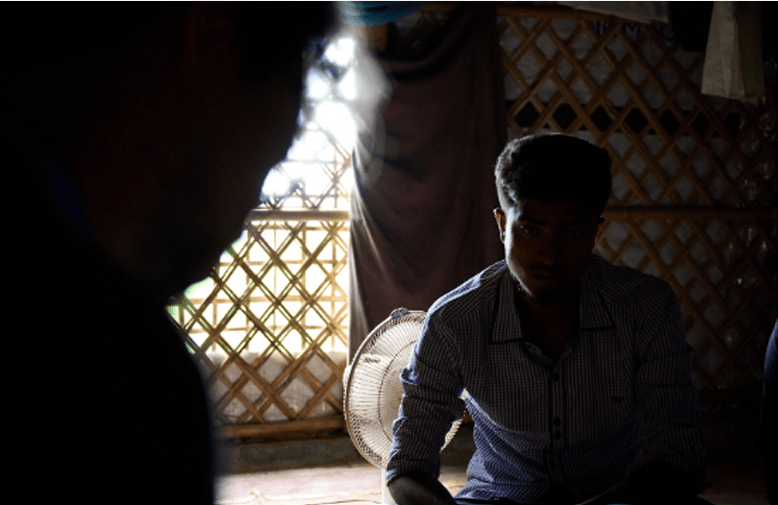
We engage directly with Rohingya survivors—both in refugee camps in Bangladesh and across the diaspora. Many of them carry the trauma of unspeakable violence: villages burned to ashes, family members murdered, women raped, children orphaned, and communities shattered. Between August 2016 and late 2017, entire Rohingya populations were forcibly uprooted through military-led campaigns that the United Nations has described as having “genocidal intent.” The survivors we speak with witnessed this horror firsthand.
But the story doesn’t begin—or end—there. Between 2012 and 2016, the Rohingya were already subjected to systematic discrimination and segregation in Myanmar. They were stripped of their citizenship, confined to camps, denied freedom of movement, and barred from accessing education, healthcare, and basic human rights. We document this history to paint a full picture of the slow-burning violence that escalated into mass atrocities.
To ensure that these crimes are not forgotten, ignored, or denied, our team conducts in-depth interviews with victims and survivors. These are conducted with the utmost sensitivity, confidentiality, and ethical care. We recognize that many of our interviewees are still experiencing psychological distress or fear retribution. For this reason, our process is guided by trauma-informed principles and respect for each individual’s right to tell their story in their own way and time.
We gather and verify firsthand testimonies, photographic and video evidence, and physical documents, including identification papers, medical records, and land ownership titles where possible. This material is carefully archived and preserved for future submission to international accountability mechanisms, including the International Criminal Court (ICC), the International Court of Justice (ICJ), and United Nations investigative bodies.
Our work contributes directly to the global pursuit of truth and justice for the Rohingya. By submitting our findings to legal teams, advocacy coalitions, and fact-finding missions, we support efforts to build cases that can hold perpetrators accountable under international law. We collaborate closely with international human rights organizations, legal experts, and transitional justice actors to ensure that the Rohingya people are not denied the right to remedy, reparation, and recognition.
The process of documentation is not only about prosecution; it is also a form of dignified resistance. Every testimony recorded is a voice defying erasure. Every piece of evidence collected is a rejection of silence. Every survivor who comes forward is a symbol of extraordinary resilience and courage. In their words, we find both the scars of the past and the hope for a better future.
We have also found that the process of sharing one’s story can be deeply healing for many survivors. In safe and supportive environments, some begin to reclaim agency over their narratives and feel that their suffering is being acknowledged. Others express that contributing to justice processes gives meaning to their pain—knowing that their voice could help prevent such atrocities from happening again.
While we have made significant progress, we also face many challenges. The political climate in Myanmar remains hostile, with the military junta continuing its repression not only of Rohingya but of ethnic minorities and pro-democracy movements throughout the country. Access to Rakhine State is restricted, evidence is being destroyed, and those who speak out face arrest or worse. In the camps, the humanitarian crisis continues to worsen, and justice can feel like a distant dream for those trapped in limbo with no legal status or path forward.
Despite this, our team continues to push forward with unwavering commitment. We are currently expanding our documentation efforts to include second-generation accounts and historical testimonies, understanding that intergenerational trauma plays a vital role in the long-term healing and truth-telling process. We are also exploring digital archiving and secure platforms to protect and preserve our data, ensuring it can be used in future truth commissions or tribunals.
Another critical focus of our work is advocacy and awareness-raising. We believe that the international community must not turn its back on the Rohingya. We regularly publish situation briefs, host forums, and participate in global events to keep the Rohingya crisis on the agenda. Our campaigns emphasize the need for sustained diplomatic pressure on Myanmar, increased humanitarian assistance, and long-term solutions that prioritize accountability, safety, and the restoration of rights.
In addition, we advocate for the inclusion of Rohingya voices in all discussions about their future. No policy should be made about the Rohingya without their active participation. This includes decisions on repatriation, resettlement, education, and community development. Our documentation efforts amplify these voices—not just as victims, but as active agents of change, storytellers, leaders, and witnesses to history.
As we continue this vital work, we remain deeply humbled by the trust that survivors place in us. Their courage fuels our mission, and their stories guide our path. Every document we prepare, every testimony we record, every case we submit—it is all for them, and for the future generations who deserve to inherit a world where their identity is not a threat, and their lives are not expendable.
We will not rest until the truth is acknowledged, the harm is addressed, and justice is served. We believe in a future where the Rohingya people live in peace, with full dignity and equal rights, in their homeland and wherever they choose to reside.