Cox’s Bazar, Bangladesh — March 21, 2025
The arrest of Ataullah Abu Amar Jununi, the top leader of the Arakan Rohingya Salvation Army (ARSA), by Bangladesh’s Rapid Action Battalion (RAB) has triggered widespread fear and uncertainty among Rohingya refugees living in camps in Cox’s Bazar.
Ataullah, who has long been at the center of ARSA’s activities, was captured during a special operation earlier this week. His arrest is being seen as a major blow to the armed group, which has been accused of a series of violent crimes inside the camps, including killings, drug trafficking, extortion, and intimidation.
However, instead of bringing relief, the development has deepened anxiety among refugees, aid workers, and local authorities who worry that Ataullah’s loyalists may attempt retaliatory attacks, potentially worsening the already fragile security situation.
Fear of Retaliation
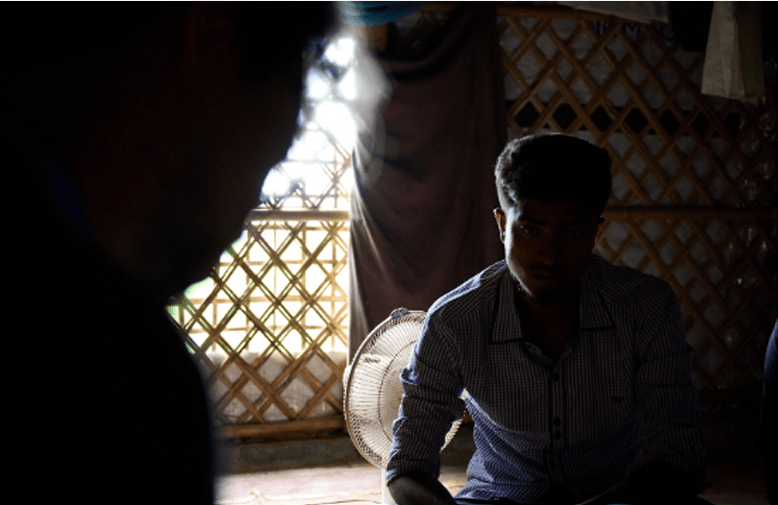
Sources inside the camps say tension is rising sharply. Many refugees, who fled genocide and violence in Myanmar only to find shelter in Bangladesh, are now caught in the middle of growing fear of internal conflict.
“After Ataullah’s arrest, we are more afraid,” said a Rohingya community leader who requested anonymity for safety reasons. “There are rumors that ARSA members are angry and may start fighting to show their power. We are innocent people but may become victims again.”
Security forces have increased patrols in several key camps, including Kutupalong and Balukhali, to prevent possible violence. Armed Police Battalion (APBn) members and RAB personnel are maintaining a heightened alert, setting up checkpoints and conducting searches for weapons.
Humanitarian organizations operating in the camps have also raised alarms about potential disruptions to aid work and the overall safety of refugees. “If violence breaks out, it will be disastrous for the community,” said an official from a leading international NGO. “We have already seen how insecurity can hamper food distribution, education, and healthcare.”
Ataullah’s Controversial Leadership
Ataullah, a Rohingya by origin but reportedly raised in Saudi Arabia, became the public face of ARSA after its emergence around 2016. The group claimed to be defending Rohingya rights against Myanmar’s military oppression. However, over the years, ARSA’s reputation has been badly damaged by accusations of criminal activities inside the refugee camps in Bangladesh.
Ataullah’s leadership was viewed by many as increasingly militant and authoritarian. With his arrest, experts warn that a leadership vacuum could either cause chaos within ARSA factions or result in even more aggressive behavior from hardliners seeking to prove their strength.
“Such a vacuum can trigger internal power struggles, which often lead to violence,” said a security analyst familiar with Rohingya affairs. “Unfortunately, it’s the refugees — the women, children, and elderly — who suffer the most in these conflicts.”
Official Stance and International Concern
Speaking to the media, RAB officials described Ataullah’s capture as part of a broader effort to improve security and dismantle terrorist networks operating within the camps.
“Our mission is clear — we want to ensure the safety of the Rohingya people and eliminate all criminal elements,” a RAB spokesperson said. “We will continue operations against ARSA and others who are destabilizing the camps.”
Meanwhile, international agencies, including the United Nations, are closely monitoring the situation. They have urged the Bangladesh government to prioritize the protection of refugees and ensure that humanitarian access is not disrupted.
“The Rohingya people have suffered enough,” said a UN representative. “Every step must be taken to prevent further violence and protect the fundamental rights of refugees.”
Uncertain Future for the Refugees
Even before Ataullah’s arrest, the living conditions in the camps were deteriorating due to restrictions on movement, lack of education and work opportunities, and fear of crime. Now, with the potential for renewed violence, life in the camps could become even more unbearable.
Many refugees express a sense of hopelessness. “We don’t know what will happen next,” said a young Rohingya man at Balukhali camp. “We came here to find safety. But safety is still a dream.”
As night falls over Cox’s Bazar, uncertainty and fear linger in the humid air. For the nearly one million Rohingya refugees trapped between a past of persecution and an uncertain future, the road ahead has never felt more dangerous.