April 21, 2025
RHRC-The Rohingya refugee camps in Cox’s Bazar, Bangladesh, are home to over a million people, half of whom are children and youth. Seven years after fleeing genocide in Myanmar, their futures remain bleak. With limited access to education, work, or safety, Rohingya youths and women face a cycle of exploitation, violence, and hopelessness. Here’s what life looks like for them and how the world can help.
Youths: A Generation Lost to Crime and Desperation
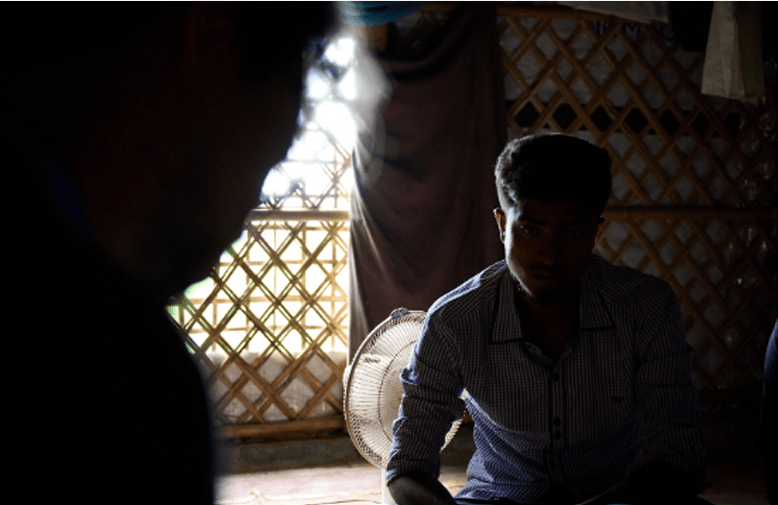
Rohingya children grow up in overcrowded shelters with minimal food, water, and no formal schooling. Over 300,000 children aged 5–17 live in the camps, but half of them likely attend informal learning centers . Without opportunities, many fall prey to criminal gangs. Boys as young as 12 are forced into theft, drug trafficking, and violence by groups. Girls face sexual exploitation, forced marriages, and human trafficking.
The lack of education fuels this crisis. Community-led schools struggle without funding. Teachers work for free, classrooms are makeshift, and higher education is nonexistent. “If we don’t educate them, they’ll turn to gambling or crime,” says Md. Shofique, a Rohingya educator.
Women and Girls: Survival Amidst Violence
Rohingya women endure systemic abuse. Many were raped during the 2017 genocide, and in the camps, they face kidnapping, forced marriages, and domestic violence. Girls as young as 13 are married off to ease family burdens . Safe Spaces run by UNICEF and NGOs offer psychosocial support and skills training, like sewing, to empower survivors. Rubaida, a survivor turned volunteer, earns $100 monthly sewing clothes—a lifeline for her family.
Yet, these programs are scarce. Limited mobility, cultural stigma, and funding cuts leave most women isolated.
Leadership Void: No Seat at the Table
Rohingya youths and women are excluded from decisions shaping their lives. Camp leaders (majhis) are selectively appointed, not elected by refugees. Women are rarely included in community discussions, and youth voices are dismissed. A 2022 survey found most Rohingya youths feel ignored by humanitarian groups.
“We’re seen as helpless victims, not problem-solvers,” says Abdullah, a youth volunteer. Without representation, solutions and skills like leadership, advocacy, repatriation or education reforms stall.
Trump’s Aid Freeze: A Crisis Multiplied
In 2025, a 90-day freeze on U.S. foreign aid under President Trump worsened conditions. Health clinics closed, maternal care plummeted, and sanitation collapsed . Pregnant women like Roshida lost access to ambulances, while NGOs laid off 120 staff overnight . Food rations were halved, pushing families deeper into poverty.
While courts partially blocked the freeze, uncertainty persists. “Donor fatigue” and competing global crises have slashed funding by 35%, leaving Rohingya reliant on shrinking aid.
With the funds secured for now, the rations are somehow stable, but the future seems bleak. Many humanitarian sectors had to stop their projects and finally their entire sectors were closed. For instance, IOM Child Protection Centre has entirely been closed.
A Call for Hope
Rohingya youths and women are not helpless; they are resilient. With education, skills, safety, and a voice, they can rebuild their community. As Rubaida says, “My children will be educated. They’ll have choices I never did” . The world must act before despair destroys a generation.