January 3, 2026
Expansion of Conscription and Coercive Measures
RHRC-Credible local sources report that the Arakan Army (AA) has commenced a systematic name-collection initiative across Rohingya-majority wards and villages in Maungdaw Township. This activity is characterized as a mobilization for forced military service. Of grave concern are consistent reports that the lists compiled include not only adult males but also women and minors under the age of 18.
Residents describe AA members conducting door-to-door visits, directly transcribing names from household registries without providing explanation or seeking consent. In households absent adult males, the names of women are reportedly recorded. When community leaders have questioned the inclusion of women and children, they have received unequivocal responses that “no house will be spared.”
This practice has instilled profound anxiety within the community, reviving traumatic memories of past persecutions and fueling fears for the future. Concurrently, internal movement restrictions have tightened significantly. Travel between northern and southern Maungdaw now requires formal permission, obtainable only through local offices that demand exorbitant fees of 10,000 to 20,000 kyats per travel letter – a sum prohibitively expensive for most residents.
Permanent Displacement and Land Appropriation
The conscription drive compounds an existing humanitarian crisis. For several months, thousands of Rohingya families displaced from at least 52 villages across Maungdaw and Buthidaung townships remain systematically barred from returning to their homes. Testimonies indicate that following their expulsion, properties were seized, residential structures dismantled for construction materials, and farmland redistributed.
A particularly illustrative case is the village of Sin Oe Pyin in Maungdaw. Formerly a Rohingya-inhabited area, it has now been transformed into a new settlement for over 100 Rakhine households. Reports indicate that these settlers have been provided with arms by the AA, and the establishment of this settlement has resulted in the closure of primary transit routes to the Rohingya, further isolating communities and severing access.
The Political Context: Exclusion Amidst a Staged Election
These localized actions occur against the backdrop of the Myanmar military junta’s highly contested nationwide election, conducted on December 28, 2025. Widely condemned as an illegitimate process designed to cement military rule, the election held no promise for the Rohingya. The community remains entirely disenfranchised, denied citizenship and basic rights, underscoring that no credible political pathway exists for them within the current framework. The events in Arakan State demonstrate that on the ground, the dynamics of conflict and ethnic subjugation continue unabated.
No Safety in Refuge: Crisis Continues in Bangladesh Camps
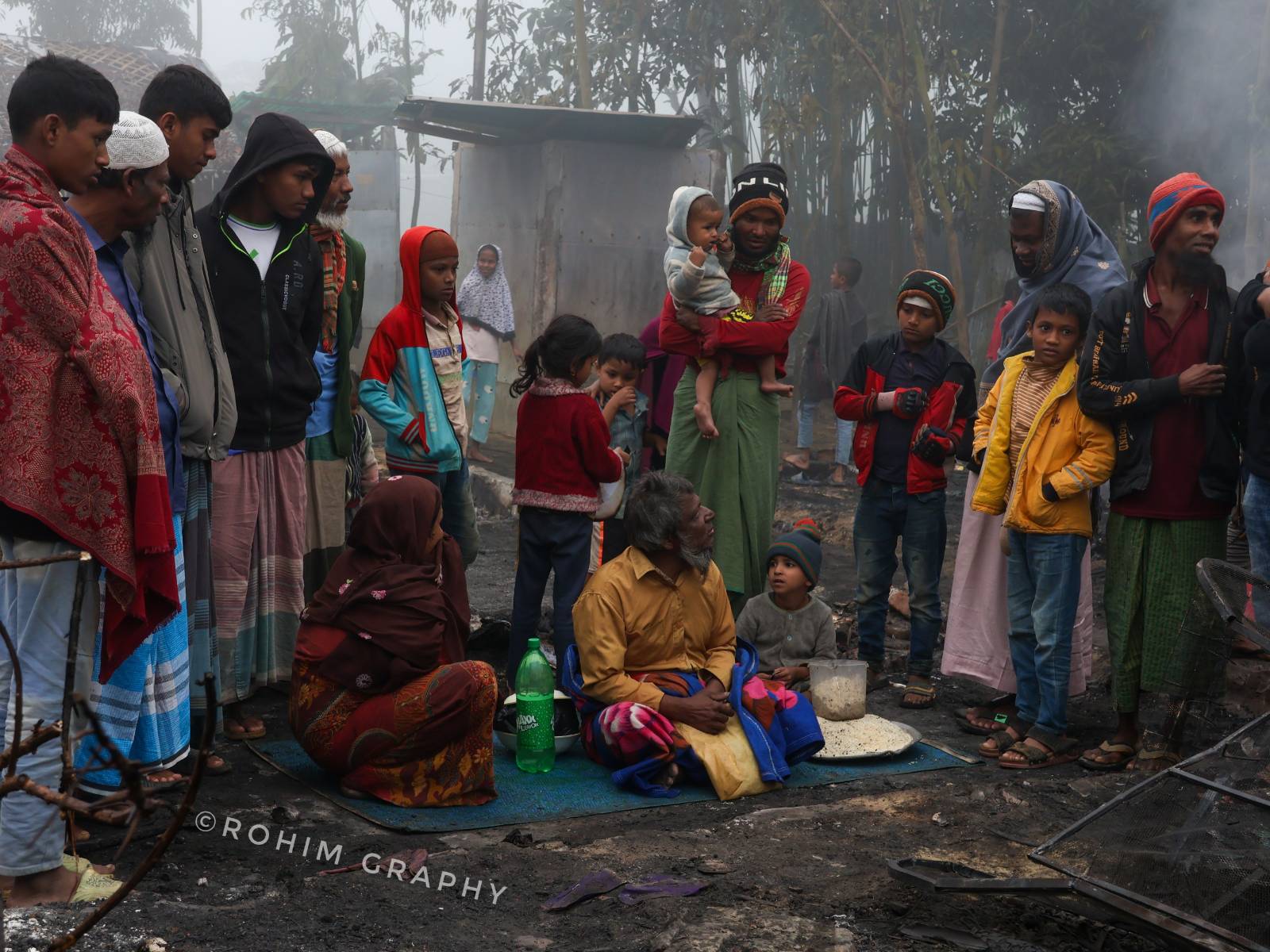
For Rohingya who fled to Bangladesh, safety is still out of reach. Life in the crowded camps remains dangerous and uncertain. A fire in Camp 24 in Cox’s Bazar on December 29th showed how fragile this existence is. The flames, spreading quickly through shelters made of bamboo and tarpaulin, destroyed about 50 homes and injured three children. Families escaped with nothing and were left homeless in the cold.
This was not a rare accident. Fires and other disasters happen often in the camps because of overcrowding, unsafe conditions, and poor infrastructure. Each crisis leaves families starting over with nothing, adding to the trauma of their displacement.