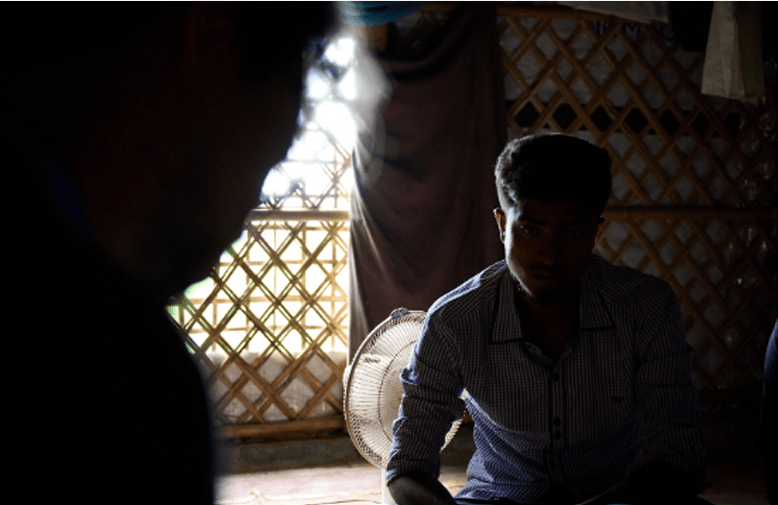
WFP’s Further Food Cuts is Another Mass Killing of the Rohingya. The Rohingya Human Rights Center (RHRC) strongly condemns the further reduction of food rations, warning that it could lead to another mass killing of the Rohingya. The UN World Food Programme has announced that there will be further cuts to food rations for Rohingya refugees in the camps, e ective June 1, due to a shortage of funding. The program has stated that it will reduce the monthly entitlement of the food voucher from $10 per person to $8 per person, following the rst reduction in March. The sensitization messages about decreasing GFA Base Entitlement displaced to the Rohingya refugee community on May 3, 2023.
The Rohingya refugees have been surviving on meager rations provided by humanitarian agencies since their arrival in Bangladesh in 2017. The initial amount of USD 12 per person per month was already insu cient to meet their nutritional needs, leading to malnutrition and child stunting.
The rst reduction in food assistance has made the situation even more dire, and the refugees are now struggling to survive with extremely limited resources. In February, UN experts issued a warning regarding the catastrophic consequences that could arise for Rohingya refugees living in camps in
Bangladesh if life-saving food aid is reduced ahead of the rst food rations reduction. They said the most vulnerable groups, such as children underve, adolescent girls, and pregnant or breastfeeding mothers, will be at a higher risk due to the food rations cuts. “Rohingya refugees in the camps have endured signi cant hardship since arriving in Bangladesh. They just require three plates of rice for both lunch and dinner and one plate for breakfast, totaling seven plates per day. Initially, they were provided with four plates per day, but this was reduced by one after the rst round of cuts,” said Kyaw Win, RHRC Director. “The upcoming reduction will result in a further decrease to two plates per day. This leaves us with only a third of the necessary food, causing severe food insecurity.” The initial food ration cuts severely impacted Rohingya refugees’ food access and caused increased malnutrition rates and nancial di culties. Refugees in the camps had reduced their daily meals, and food quantity and quality. The Rohingya, who survived genocidal attacks by the Myanmar military, are now being victimized by the international community’s failure to ensure their fundamental right to food.
The RHRC urges the UN to take prompt action to address the issue and ensure that Rohingya refugees receive su cient food assistance to meet their nutritional needs. Addressing the funding shortages faced by the WFP is crucial, and nding sustainable solutions is necessary to provide the
refugees with the necessary support to rebuild their lives. The RHRC also calls on the international community not to turn their backs on Rohingya refugees. The shortage of funding is a critical barrier to ensuring the right to food. This signi cant gap in funding has resulted in “another mass killing” of the Rohingya. The international community should keep its pledge and increase its humanitarian aid and nancial support to provide Rohingya refugees with adequate food in the spirit of responsible sharing. ENDS
Notes to editors:
RHRC monitors human rights and conducts research in Cox’s Bazar and Rakhine State since 2021. As a Rohingya-led grassroots organization, it advocates for the persecuted Rohingya community and raises awareness through reports and Rohingya briefs to promote and protect their rights.
For more information, please contact:
Rohingya Human Rights Center
homepage: https://rohingyahumanrightscenter.org/
Email: rohingyahumanrightscenter@gmail.com