February 15, 2026
Two Fire Incidents in Rohingya Camps Raise Fresh Safety Concerns
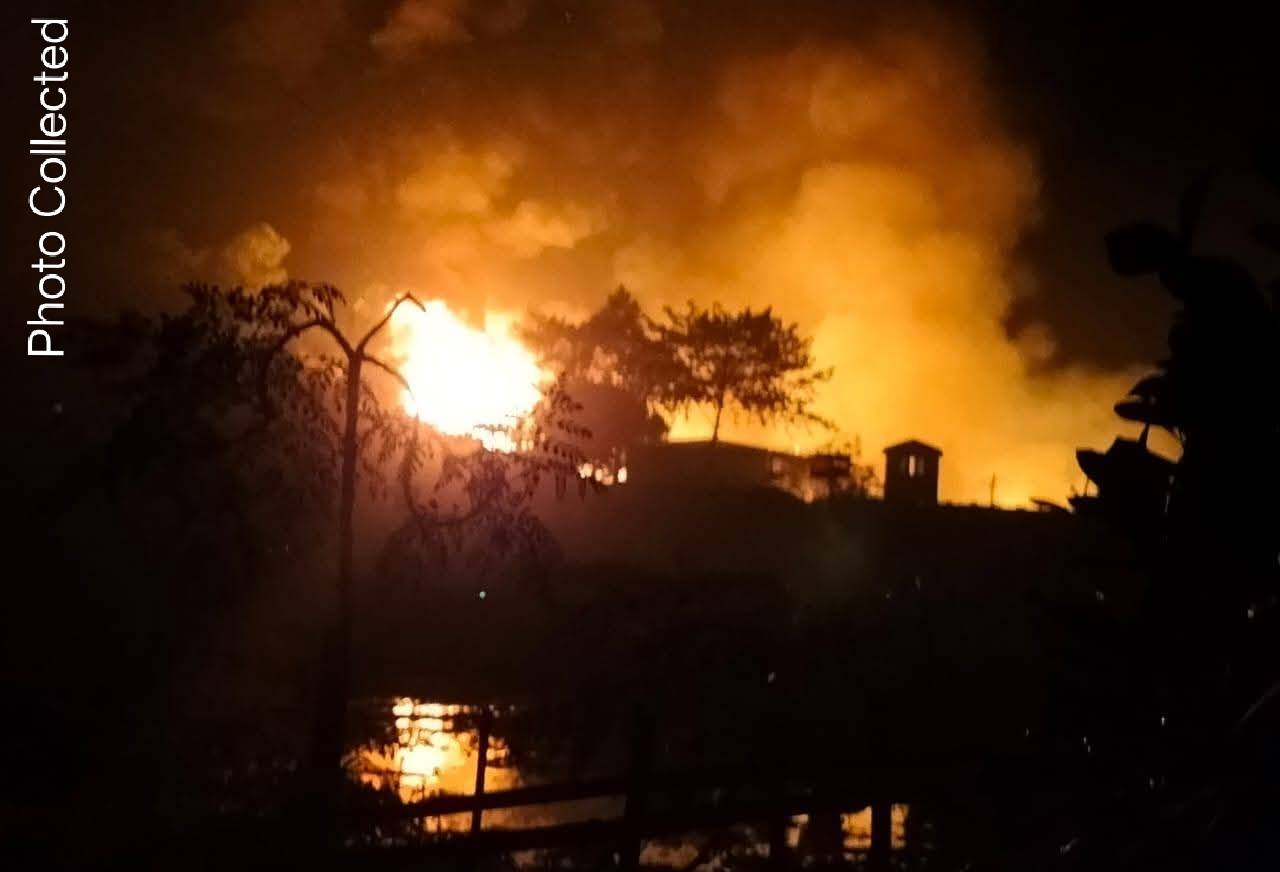
RHRC – Two separate fire incidents within three days in the Rohingya refugee settlements of Ukhiya have renewed concerns over fire safety in the densely populated camps, where shelters are built close together and many families rely on LPG cylinders for daily cooking. The first incident occurred on February 10, 2026, in Camp 9, Block C-06, where residents suspected a fire originated from an LPG gas cylinder inside a shelter. As flames began to spread, nearby families rushed to the scene and worked collectively to control the fire before it could reach surrounding shelters, with community members’ swift action playing a crucial role in preventing what could have turned into a major disaster.
Just three days later, on February 13 at approximately 3:15 AM, another fire broke out near Army Road in Camp 11, spreading quickly and creating panic among residents. The blaze moved rapidly through parts of the area due to the highly flammable materials used in shelter construction, prompting an immediate response from volunteers and community members who focused on evacuating children, elderly people, and other vulnerable individuals to safer locations while others attempted to contain the flames. Fire service personnel were informed shortly after the first incident and arrived to bring the situation fully under control, with no injuries or casualties confirmed in either incident, though residents emphasize these back-to-back incidents highlight the ongoing vulnerability of Rohingya camp settlements to fire hazards and the urgent need for stronger safety awareness, preventive measures, and improved fire preparedness to avoid future tragedies.
Congratulatory Message and Rohingya Refugees’ Hopes from the New Government
The Rohingya community, humanitarian stakeholders, and rights advocates extend sincere congratulations to Prime Minister-elect Tarique Rahman, Chairman of the Bangladesh Nationalist Party (BNP), on the party’s electoral victory and the formation of a new government in Bangladesh. This democratic transition marks an important moment for the nation and brings renewed attention to pressing humanitarian and regional issues, including the protracted displacement of Rohingya refugees who fled persecution in Myanmar. For years, Bangladesh has demonstrated exceptional humanitarian leadership by providing protection and shelter to over a million Rohingya refugees in Cox’s Bazar District, despite significant environmental, social, and economic pressures, a generosity that has been widely acknowledged by the international community.
With this political transition, Rohingya refugees now hold expectations for renewed protection, safe repatriation, and justice under the new political leadership in Bangladesh. The community looks forward to engaging with the new government to ensure continued safety within the camps while advancing dialogue on pathways to justice and accountability, alongside the facilitation of safe, dignified, and voluntary repatriation to Myanmar when conditions permit. This moment represents both a continuation of Bangladesh’s humanitarian leadership and an opportunity for renewed international cooperation on one of the world’s most protracted displacement situations.
EU Adds €2 Million for Rohingya Food Aid in Cox’s Bazar
The European Union announced an additional €2 million on February 11, 2026, to support food and nutrition assistance for Rohingya refugees and host communities in Bangladesh. The funding will support the World Food Programme (WFP) operations in the camps, bringing total EU support to WFP Bangladesh in 2025 to €15.3 million. WFP currently provides food assistance to nearly 1.2 million refugees through e-vouchers valued at $12 per month, alongside nutrition support for children and mothers and school meals for thousands of children, representing a critical lifeline for the refugee population.
However, humanitarian agencies have warned of a significant $147 million funding shortfall for 2026, cautioning that food assistance could be reduced as early as April without additional support. This warning raises serious concerns about the continued ability to meet the basic nutritional needs of the refugee population, with potential reductions in food assistance expected to have severe consequences for refugee health, nutrition, and overall stability within the camps if additional international contributions are not forthcoming in the coming months.
Property Seizure Fears in Maungdaw Township After AA Announcement
Residents reported growing fear after the Arakan Army announced plans on February 11, 2026, to take control of homes, shops, and properties left behind by families who fled fighting in Maungdaw Township. Many Rohingya and other residents had fled during clashes between Arakan Army and Myanmar junta forces, leaving properties unattended as they prioritized personal safety and the safety of their families. Local sources report that the Arakan Army described these properties as “ownerless” and indicated they could be taken under its administration or demolished if left unoccupied, creating profound anxiety among displaced populations.
Displaced families have expressed deep anxiety regarding this development, stating they fled for safety during active hostilities and now fear permanent loss of homes and businesses if they cannot return soon. This situation raises serious humanitarian and legal concerns regarding property rights, the prospects for durable solutions for displaced populations, and the potential for permanent dispossession of communities already facing significant vulnerabilities, with families watching developments closely while hoping for conditions that would allow safe return to their properties.
AA Member Arrested at Border in Naikhongchhari
Personnel from Border Guard Bangladesh detained an armed individual near the Bangladesh–Myanmar border on February 1, 2026, according to security sources reporting from the area. A patrol from BGB Battalion 34 reportedly stopped a young man in the Baishfari area after noticing suspicious movement, with authorities reporting they recovered an assault rifle, magazines, ammunition, and a military uniform during the apprehension. The individual, identified as Khine Maung Cho, age 20, was said to have crossed into Bangladesh illegally and was later produced before a court under the Arms Act and for illegal entry, representing a significant border security incident.
Security observers have noted that such cross-border incidents raise concerns about instability and the use of border routes linked to wider networks, including smuggling activities. This incident highlights the ongoing challenges of maintaining border security in a region affected by conflict in Myanmar, with implications for the safety and stability of both border communities and the Rohingya refugee settlements located in proximity to these border areas, reinforcing the need for continued vigilance and regional cooperation on security matters.